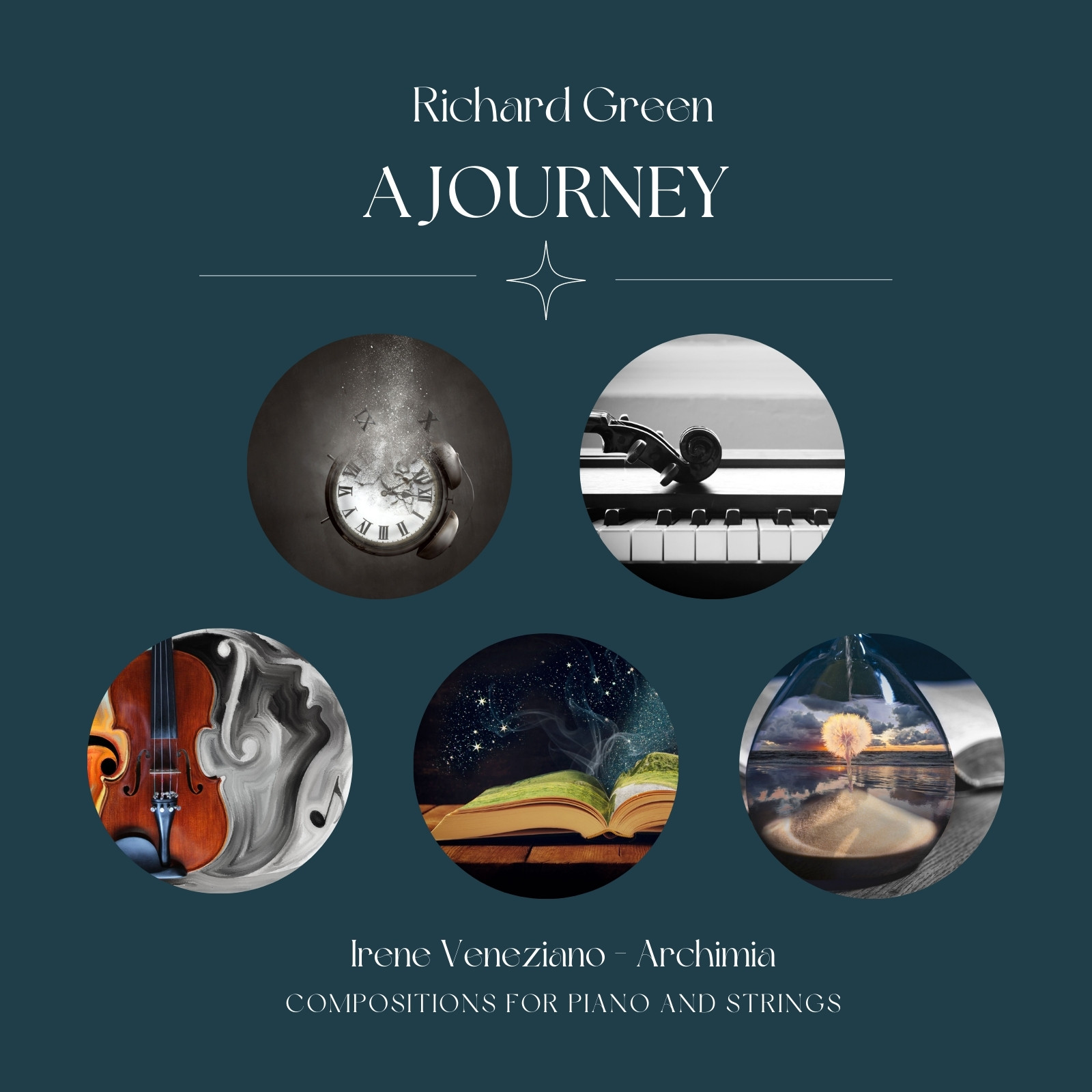
Richard Green’s Sad but Beautiful is the kind of instrumental release that doesn’t simply ask for attention — it quietly earns it. Built around expressive piano work, cinematic string arrangements, and a deeply reflective core, the single stands as one of the most emotionally articulate moments from Green’s ambitious trilogy project, A Journey. Based between Milan and London, Richard Green has always shown a restless musical curiosity. From electronic experimentation to neoclassical composition, his catalogue refuses to settle into one lane, and Sad but Beautiful feels like the culmination of that artistic freedom. Rather than chasing trends, Green leans into storytelling through composition alone, allowing melody and atmosphere to carry the emotional weight. What immediately stands out is the balance between elegance and melancholy. The track moves with the grace of contemporary classical music, yet subtle traces of blues phrasing and modern cinematic structure give it a wider emotional reach. There’s a feeling of movement throughout the arrangement — almost as if the composition itself is searching for answers it already knows cannot fully exist.

A huge part of the record’s impact comes from the performances. Pianist Irene Veneziano delivers the piece with extraordinary sensitivity, navigating the shifting dynamics with precision and restraint, while Archimia add depth and tension through sweeping string passages that never feel excessive. Together, they elevate Green’s writing into something immersive and deeply human. The production also deserves recognition. Despite its classical foundations, the track never feels distant or academic. Instead, it carries the emotional accessibility of modern soundtrack music while preserving the sophistication of chamber composition. Every section feels intentional, every progression connected to the broader narrative Green is building across the trilogy.
Conceptually, Sad but Beautiful reflects Green’s philosophy that life itself exists in contradiction — moments of beauty inevitably intertwined with sadness. That emotional duality is present in every layer of the composition, making the track feel both intimate and universal at the same time.
What makes the release particularly compelling is its refusal to exist as a standalone moment. Green has crafted A Journey, The Circle Closes, and First Light as interconnected chapters, combining music, artwork, and thematic storytelling into a larger artistic statement. In an era dominated by disposable singles, that level of long-form vision feels refreshing. For listeners who appreciate emotionally driven instrumental music that sits somewhere between neoclassical, cinematic, and contemporary crossover composition, Sad but Beautiful is a rewarding listen. It’s sophisticated without becoming inaccessible, emotional without slipping into sentimentality, and ambitious without losing clarity. Richard Green isn’t simply composing songs — he’s constructing atmosphere, narrative, and reflection through sound. Sad but Beautiful proves he understands the difference.
Connect with Richard Green:
Spotify
Instagram
SoundCloud
Bandcamp
Facebook
About the Author




 English