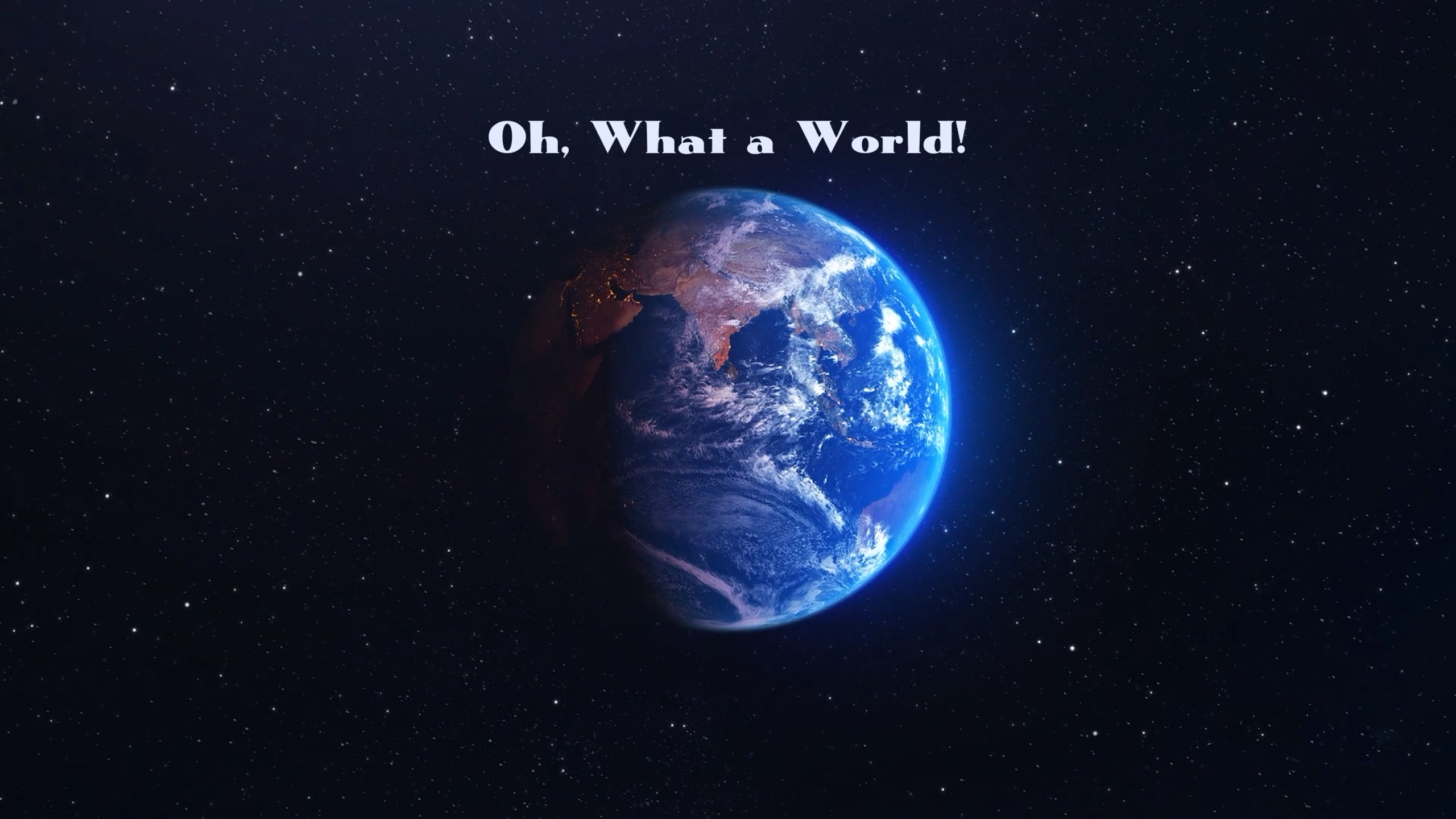
Rusty Reid offers a thoughtful and deeply rooted interpretation of “Oh, What a World”, the song first released by Kacey Musgraves in 2018. It is included as the final track on his double album, Lone Stardust (Masterworks of Texas Songwriters), and serves as a suitable concluding chapter to a project marked by emotional changes, reflection and the lasting power of songwriting. As an American singer-songwriter from Texas who is currently based in the Pacific Northwest, Reid uses his indie-folk, country and rock influences to give the song its own character. While Musgraves’ original has a light, almost surreal atmosphere, Reid tackles the song with a more grounded attitude, allowing the music to breathe and at the same time giving space for the guitars and vocals to rise. This is a deliberate decision which honours the spirit of the original without merely copying it. The song’s sense of wonder matches particularly well with Reid’s reflective style, providing a moment to stop and admire the world beyond the daily hustle. Following the emotional highs and lows of the rest of the album, “Oh, What a World” brings about a change in viewpoint, making the final section something that is hopeful and gently uplifting. Reid refers to the track as something that complements his spiritual side, and it is this intention that gives the performance a purpose that goes beyond being a cover.

The record is also enhanced by a capable group of musicians who contribute to the mixture of warmth, clarity and instrumental depth. Reid sings lead, with Jason Roller playing electric guitars, Chris Condon on acoustic guitars, Dane Bryant on keyboards, Jay Gorman on bass and Robert Blair on drums. This lineup enables the arrangement to shift smoothly between the intimacy of folk and the wider scope of country-rock, the guitars offering space and movement without causing the song’s reflective core to be lost. The contrast between the acoustic texture and the electric tone is especially suitable for a song that combines a feeling of ordinary reality with something more extensive. Unlike Musgraves’ version, which leans too much on a dreamy atmosphere, Reid strives for a sound that seems grounded and human yet still leaves room for the performance to rise. The songwriting is the work of Musgraves, Daniel Tashian and Ian Fitchuk, the original composition forming a solid basis for Reid’s version. Its position at the end of Lone Stardust is also important since it is the only track on the album written by women and thus brings a different viewpoint to Reid’s selection of Texas songs while underscoring the idea that excellent songs can transcend artistic boundaries. The fact that he has included it shows that his admiration for songwriting extends beyond genre or the identity of the performer and focuses instead on the emotional and philosophical bond that a song can establish.
In the end, “Oh, What a World” works as a concluding track since it causes the listener to look towards the future rather than focusing on the past. Reid has referred to the album as an emotional roller coaster, and this last song provides a conclusion to that experience, ending on a note of appreciation and with a spirit of openness. Rather than trying to match the original recording, his version gives the song a different emphasis, achieving this by using a more down-to-earth vocal performance and a band arrangement that slowly opens up around it. The way in which intimacy is balanced with a feeling of uplift is in keeping with Rusty Reid’s broader musical style, which spans indie folk, country and rock yet always stays focused on the art of songwriting. As a single track, it gives listeners a straightforward way of getting to know Lone Stardust, and for those who go on to listen to the entire double album they can see how the song acts as the final element in a longer sequence. There is a certain appropriateness in bringing an extensive musical journey to a close with a song that promotes gratitude, curiosity and a fresh perspective. Rusty Reid’s “Oh, What a World” is a genuine and thoughtfully crafted interpretation, respecting Kacey Musgraves’ songwriting while at the same time establishing its own position within his body of work. It leaves the album on a thoughtful high note, serving as a reminder that at times the most significant ending is one that makes the world seem full of possibilities once again.
“Rusty Reid brings a down-to-earth, roots-oriented warmth to Kacey Musgraves’ ‘Oh, What a World’, turning the final section of Lone Stardust into a hopeful reflection on wonder, gratitude and the beauty of being alive.”
Web Links
About the Author





 English